Note – all the links to session recordings go to Saleforce+, you need to register (for free) in order to watch them.
Preparations
I was a speaker at DataFam Europe 2025, which was held in London on 2nd-3rd December, so from my point of view the event started a long time in advance.
The news about DataFam Europe was only released in September, and almost immediately the applications to speak were opened, on a very short timeline – from 16th to 29th September. I’m sure it’s not a coincidence that Agentforce World Tour London was held on December 4th, and that probably forced the schedule. Having spoken in 2024 I was well acquainted with the process, and to hedge my bets I sent in three different applications, all of them new. This involves filling in a rather long form, with the important parts being the title, abstract, and “Why should this session be presented?”. I knew exactly what subjects I wanted, but I used some GenAI to generate a list of catchy titles for each based on the abstract, and then chose and modified the best one. I then used it to refine the abstract as well.
My application was approved very quickly (I was informed on October 8th), so I had almost two months to prepare the presentation. Tableau always assign you a “Content Owner” who makes sure you’re on track, but my previous experience had been that they fully trusted us, the community speakers, regarding the technical content, and didn’t ask to review it at all – which had surprised me the first time. This year I was contacted by a couple of Solution Engineers from Tableau a couple of weeks before the event, and we set up an hour to go over my presentation. Their feedback was really helpful, and I made a few changes, even though it was on a tight schedule. I don’t know if this was implemented for every community speaker, but it’s exactly what I would have expected, so it was very welcome.
The Conference
The action started with a meetup (nominally “Data + Women”, but open to anyone) at the Information Lab offices on Monday evening. This was mainly a gathering of data people chatting and playing games, where I caught up with quite a few online friends, and made some new ones as well. Notably, all the Tableau senior management who were in town also made an appearance.
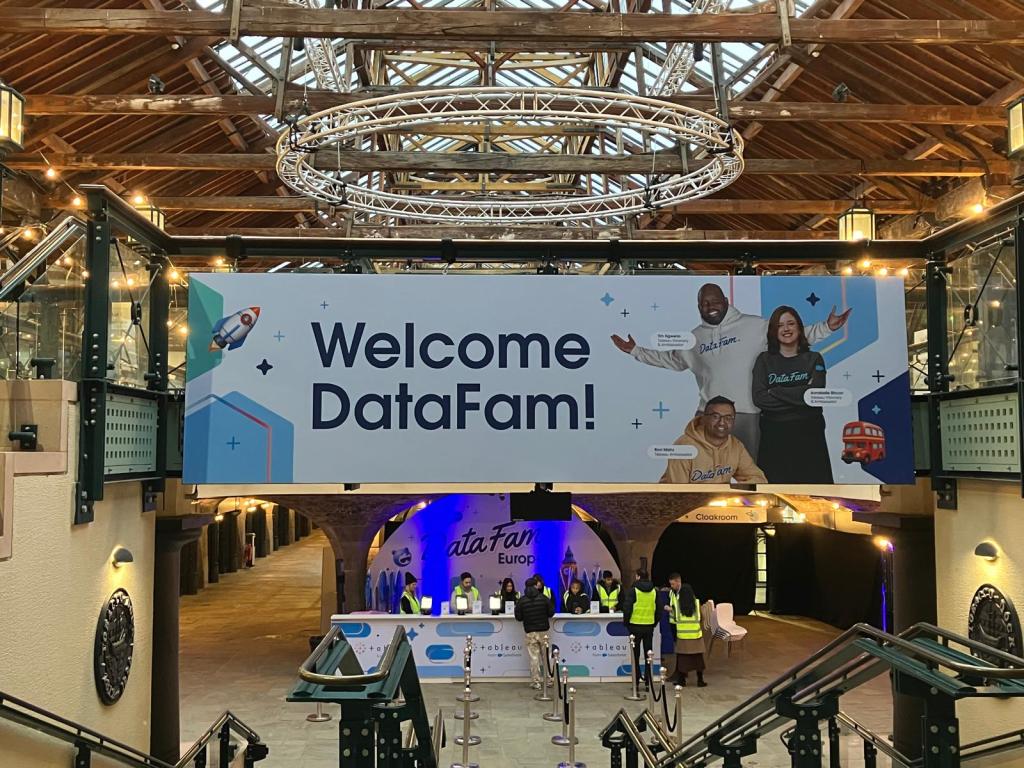
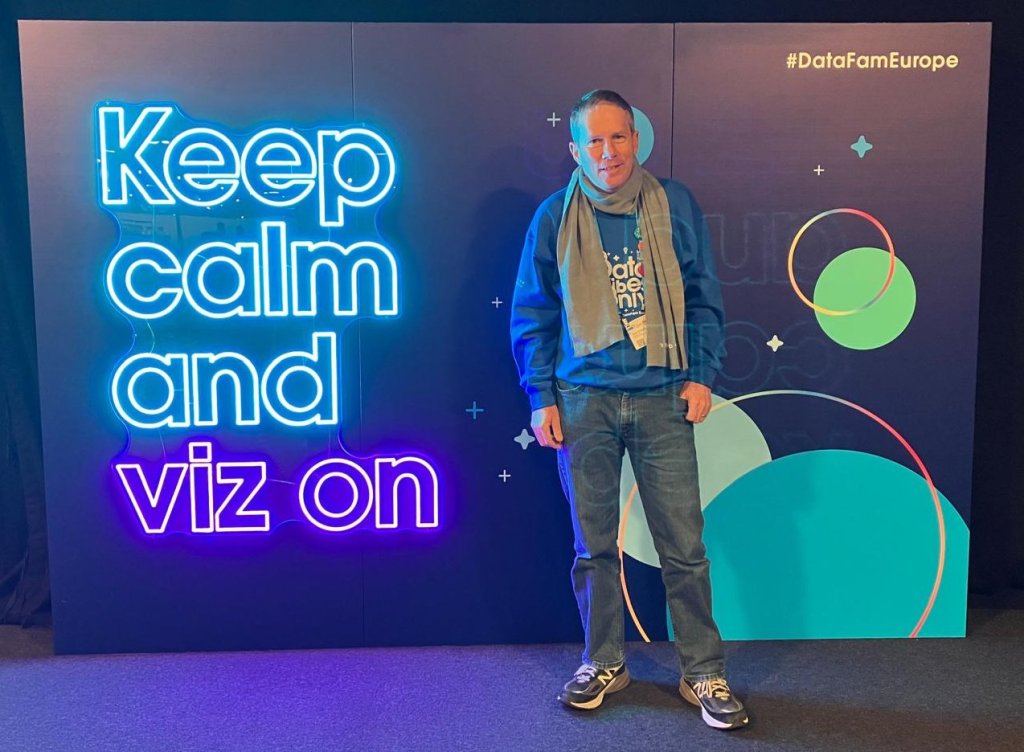
Tuesday was conference day, and everyone appeared at Tobacco Docks – which is a relatively large venue, but a bit chilly (we were warned in advance). On the second day I brought the Tableau scarf that we received in our welcome bag last year (and it helped), but there wasn’t any similar swag this time. There was enough space so it didn’t become too crowded, but if you were looking for someone you could find them quite easily.
I was the only attendee from Israel except for the Salesforce employees, but I connected with them at their presentations and we’re already continuing the conversations back at home. Apart from that I met many friends who I’ve encountered as an Ambassador over the past three years, some of them at my lowly level and others very famous in Tableau circles (various Andy’s, etc.), and the nice thing is that everyone in the community is treated as an equal, as has been noted many times before.
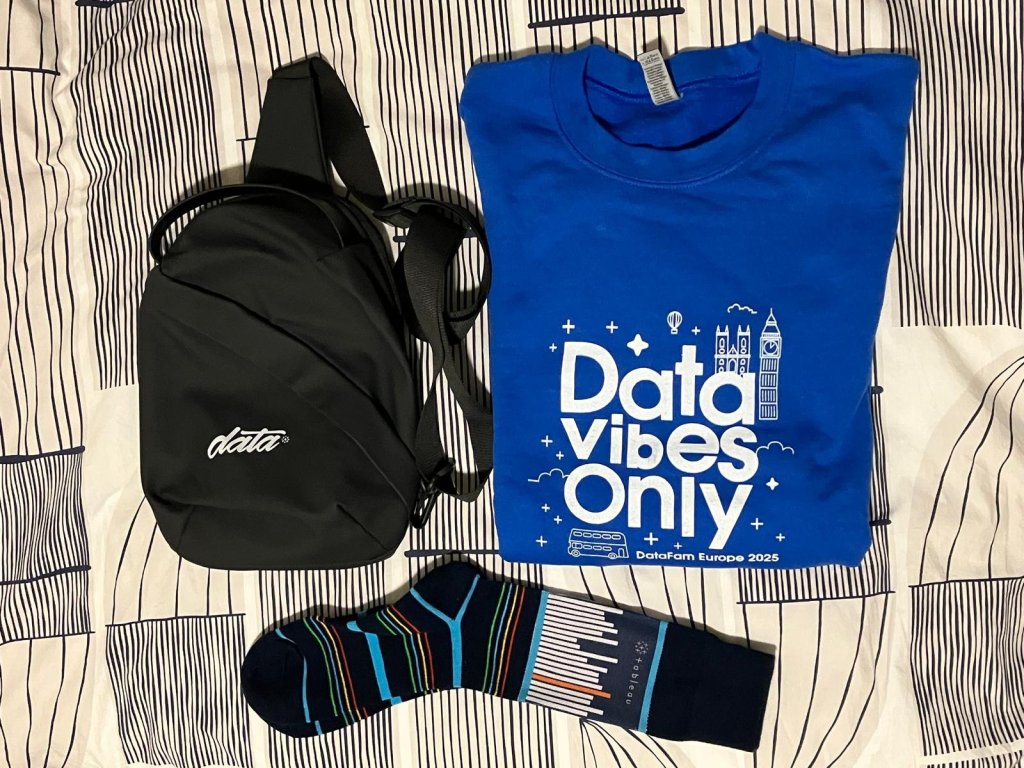
Unlike last year, there was a pop-up shop with some nice branded stuff, at semi-reasonable prices, and I indulged myself. There were the usual partner booths, snacks throughout the day, and in general a very welcoming and friendly atmosphere.
After the sessions (more about that later) we had the evening reception, which was basically just a lot of people hanging around and chatting. No problem with that, of course, but at some point I just quit for a quiet fish & chips and back to the “hotel” at my sisiter-in-law’s house. Just a note for Tableau community managers – the huge Jenga game is a safety concern, you need to clear a 2.5m radius around it from seating options, because one day someone will get hurt!
Wednesday was a shorter day, so attendees could travel home in the evening. I was staying anyway, so I was present when they packed up the shop and started giving away the remaining stock for free – which, IMHO, is an insult to those who bought the same items earlier at full price. That doesn’t mean that I didn’t take anything…
The Keynotes
There were three keynote sessions, with room for everyone (500 people?) to attend. First was the Opening Keynote, with the usual presentation by Tableau management. As usual for these days, the main presentation was mostly about AI and Agents. Then there was a great talk by Matthew Miller about some real Tableau work, on the humidity level in the soil for his trees (!), and a customer / community panel who said all the scripted things that were expected, but didn’t enlighten anyone in the community.
I’ve read a lot of criticism (mostly on LinkedIn) about the direction, and I agree. The keynote seemed to be aimed at corporate executives who are thinking about purchasing Tableau (or upgrading to the AI capabilities), while most of the attendees seemed to be community members. Maybe the mix is different at TC, where there are thousands of attendees, but here it was the wrong audience.
One phrase that I liked, also by Matthew Miller: “Accurate, actionable, analytical answers, for anyone, anywhere, at any time” (I hope I got it correct).
Then there was DataFam Slam – basically an entertainment show pitting five Tableau employees against five community (DataFam) members with short Tableau tips, and the audience voting for each tip. For me it was mostly fun, but I’m sure some of the tips were new for many of the audience, and I’ve written in my previous blog post about Andy Cotgreave’s winning tip for the DataFam (lucky that he switched sides earlier this year).
DataFam won, of course 😊
On day two we had True to the Core (not recorded?), with Tableau’s senior management fielding questions from the audience. Last year I was the first to ask a question, but this time I just listened. Some of the questions were really insightful, and I felt that the answers were sincere – especially when the question was “What question do you not want to be asked?”!
I’m not good at remembering this stuff (questions and answers), but I think Tableau (Salesforce) are trying to balance between maintaining and growing their core business – Tableau Core, which includes the DataFam community – while also catering for the Salesforce imperative, which is to increase adoption of Tableau (Next) within the 70%+ of Salesforce customers who don’t have Tableau, and can contribute a lot of revenue. If we keep that in mind, we’ll hopefully be able to thrive within both worlds.
My Session
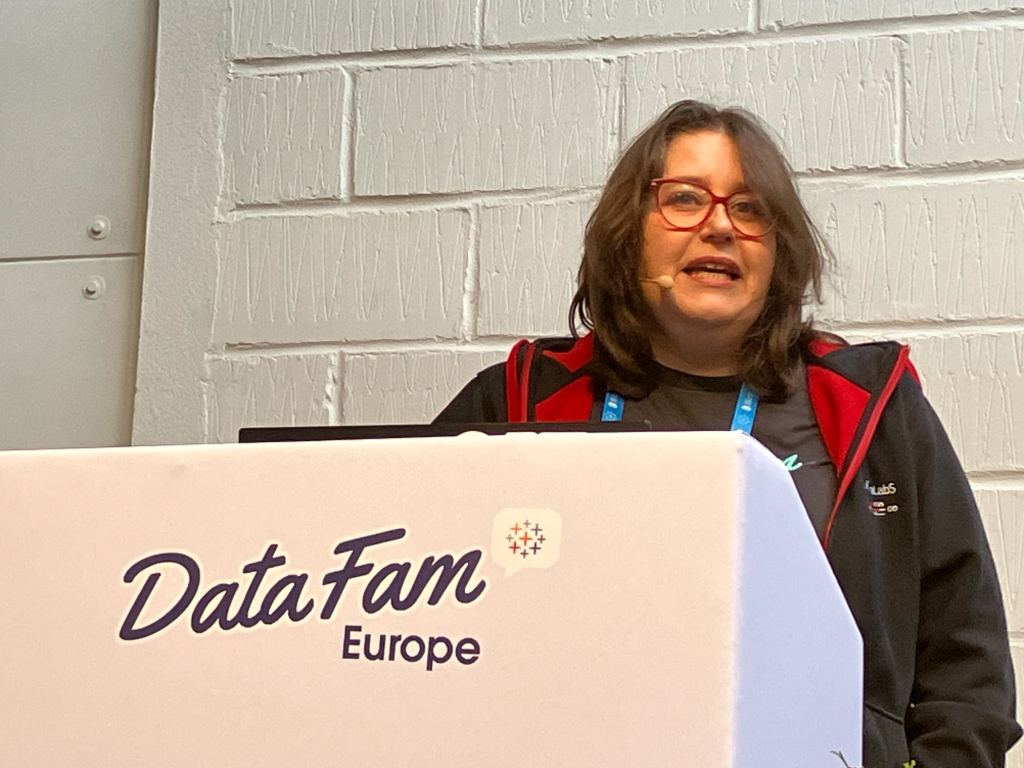
I presented my session (“Tableau Multi-Fact Models: Insights, Issues, and Fixes”) on Tuesday afternoon, to a relatively full hall. The onsite technical team were very professional, and there were no glitches. Because it was a “Silent disco” format, where the audience had headphones for the audio, there was no real option for any interaction, which was perfect: I knew from the rehearsals that I was going to be just over the allotted 30 minutes, and I ran through my content very fast.
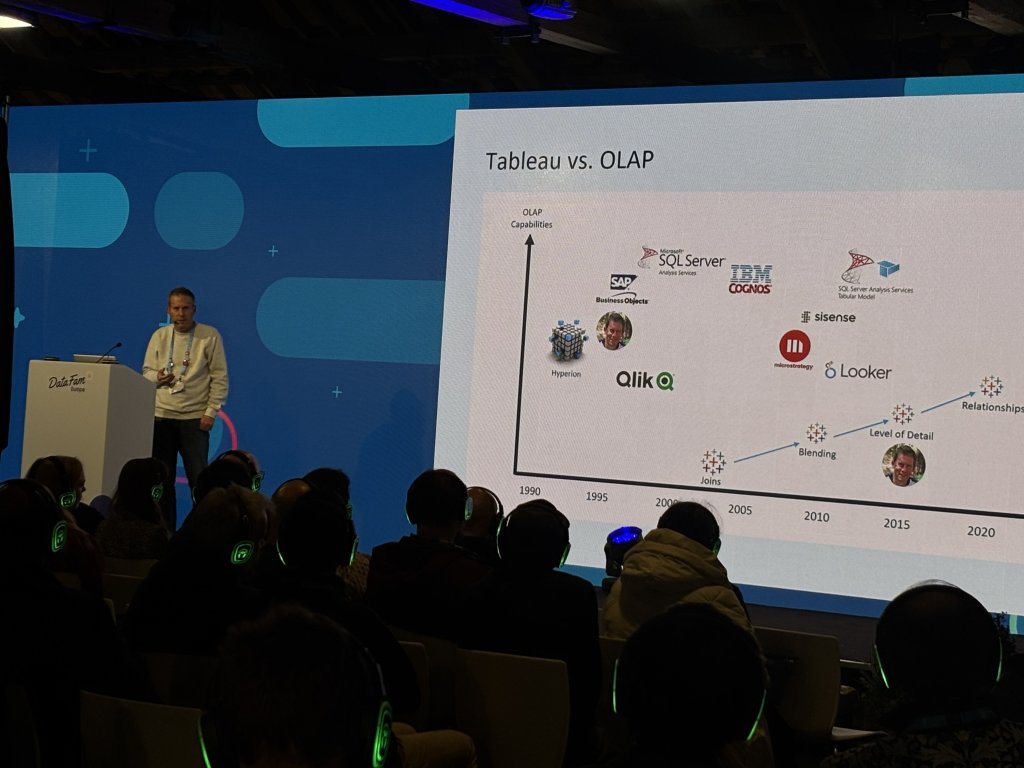
My aim was to present an overview of the multi-fact data model, that was released in Tableau 2024.2 and is now starting to be more widely used. I reviewed the history of the Tableau data source models, showed how the new features work, gave some tips on implementation (Insights), and ran through some residual bugs (Issues and Fixes) that will hopefully be fixed in the near future.
Feedback was good, both from attendees that I don’t know personally and from fellow ambassadors (and a Visionary or two). I’m glad that I succeeded in enlightening some people, and I hope this will drive adoption of this model – and maybe push Tableau to invest a bit more in improving it.
The recording is here.
The Breakout Sessions
Most of the time at the conference was spent attending the “breakout sessions”, 30 or 45 minutes each, with a choice of 3-4 different sessions in each time slot (easy compared to Tableau Conference, where you may have to choose between 20 at the same time). There were longer hands-on training sessions as well, but I chose to skip them, so as not to take a spot from someone less experienced, who could benefit more. They are usually really fun, but less intensive, and I know most of the stuff.
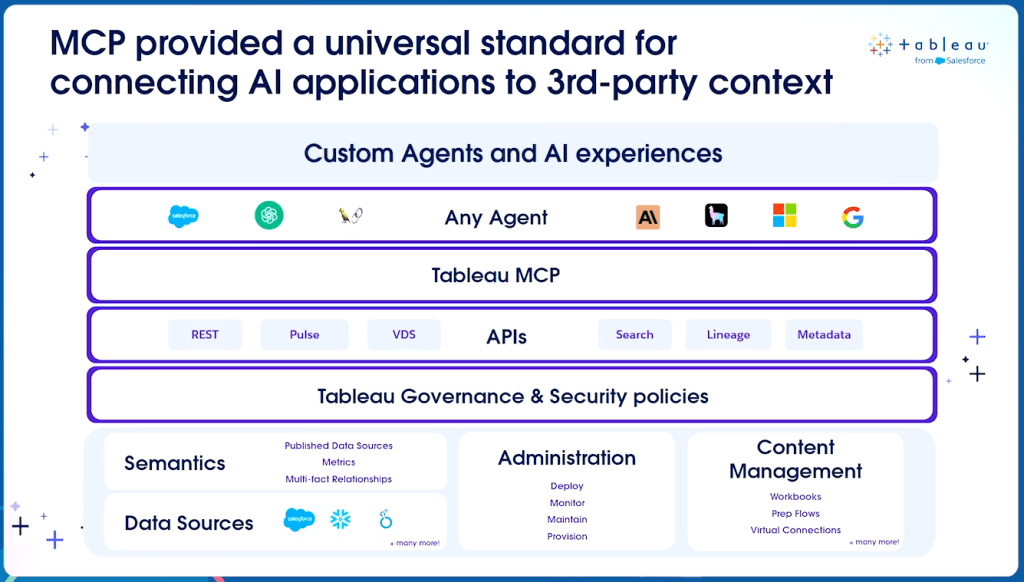
On the first day, not by design, all the sessions I attended were focused more on Tableau Next and AI, and mostly presented by Tableau employees. At some point it became boring – and they even used the same demos, so I was seeing the exact same functionality twice. Fortunately, much of the content was relevant for me, because I have to understand the whole Tableau ecosystem in order to educate our customers and point them in the right direction. The progress being made with MCP is especially interesting, because it could enable integration between Generative AI and Tableau, without investing in Tableau Next or paying a steep premium for Tableau+ licensing. At the end of the day I decided that tomorrow I would attend only Tableau Core sessions.
So on the second day I did a round of “real” Tableau sessions. The highlights:
Tremendous Tableau Tips by Heidi Kalbe, Nhung Le and Tore Levinsen. Just a selection of tips, some well known, some less, but all interesting.
The Secret Life of Tables by Agata Mezynska. A great session on how to make tables more attractive, and insightful, for the users.
Beyond the Boundaries of Tableau by Tristan Guillevin. Not content with his “simple” viz extensions, Tristan is planning new and exciting implementations on Tableau APIs not yet released.
Co-Designing with AI by Pablo Gomez. Very relevant for old-school Tableau developers who want to use AI as a design assistant, not directly within Tableau.
Of course I couldn’t attend every session that I wanted, so I prioritized the more advanced stuff over the fun, and I’m looking through some other sessions on Salesforce+.
Summary
Was the trip worth it? Definitely – but I was there on the cheap compared to most others: Speakers don’t pay for registration, I wasn’t paying for a hotel, and my employer payed for the flight.
But ignoring the cost (or lack thereof), it was a good conference. Great networking, enough sessions for both the desktop and the AI crowds, and a constant feeling of community. I’ve heard from veteran conferencers that the community and content were better in the previous decade, but I accept that times are changing, and there’s enough to go around for everyone. I’ll make my bid for TC 2026 (much more expensive), and maybe I’ll be there. If not, we’ve been promised that there will be a DataFam Europe this year (2026) as well.


Leave a comment