Even when you’ve been working with Tableau for over a decade, there can be some small features that you haven’t encountered. That’s what happened to me very recently, while working on a customer dashboard.
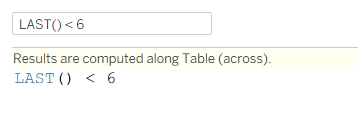
I was filtering a table of data, that included totals, using a table calculation, to get the last 6 (or N) months – something like this:
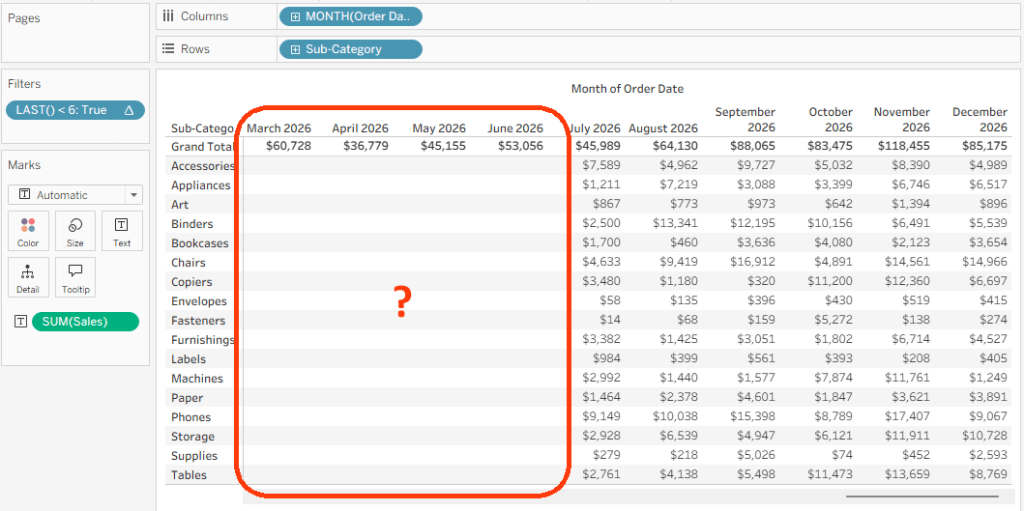
And this is what I saw:
The data was filtered, but the Grand Total row wasn’t being filtered, and for a moment I was worried that I would need some complicated calculations to overcome a strange “bug”.
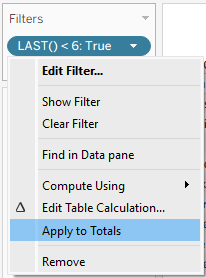
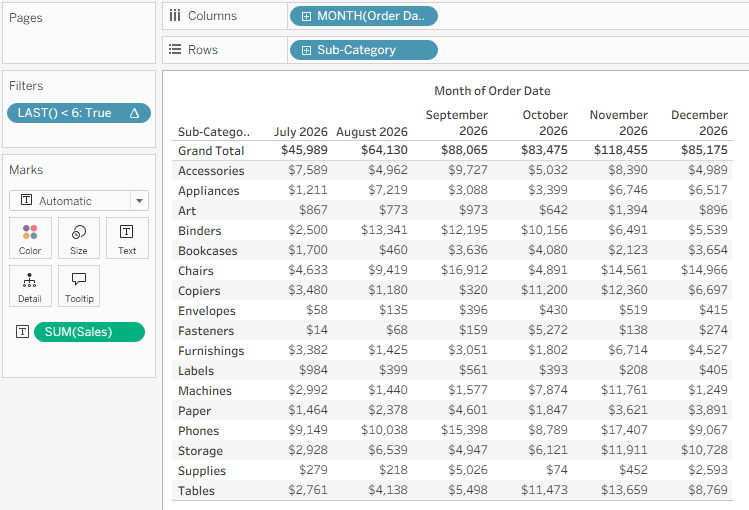
However, I played around a bit, and almost immediately saw something I had never noticed before: an “Apply to Totals” menu option in the filter card, available only for table calculations. Select it, and the totals are filtered as well.
You won’t use it just now, but if you encounter a similar problem at some point, hopefully you’ll remember this small tip, and go straight to the menu option.
And before you ask – yes, I checked, it is available in Web Edit as well.
A common feature of many programming languages is User-Defined Functions (UDF). These are currently missing from Tableau, and I think adding such an option would be a real benefit to developers – what you might call a “Quality of Life” improvement.
What do I mean by UDF? I mean functions that can be created just like calculated fields, but with placeholders for parameters or fields so that they can be re-used several times, instead of being re-written with slight variations. We’ll start by defining an option for the syntax, and then look at a few examples.
What I can envisage as syntax for a UDF is similar to a normal calculated field, but with a placeholder for a referenced field or parameter. For example, let’s say I have a calculation for Sales in various periods:
Calculated fields:
Current Period Sales: SUM(IF [Current Period] THEN [Sales] END)
Previous Period Sales: SUM(IF [Previous Period] THEN [Sales] END)
Parallel Period Sales: SUM(IF [Parallel Period] THEN [Sales] END)
Implementation using a UDF:
Period Sales: SUM(IF <field1> THEN [Sales] END)
(This is a definition of a UDF accepting a parameter called <field1>)
Current Period Sales: [Period Sales]([Current Period])
Previous Period Sales: [Period Sales]([Previous Period])
Parallel Period Sales: [Period Sales]([Parallel Period])
This is just a simple example, of course. I’m sure that if Tableau decide to implement something like this they’ll find a good idea for the exact syntax.
UDFs have two great advantages. One is that you can re-use complicated expressions by simply changing the referenced field, as in my example, saving the effort of duplicating them and making small changes. The other is maintainability – if you need to modify the calculation, you only have to modify the UDF, and not multiple similar calculated fields.
I’ve encountered countless situations where this could be useful, but let’s just mention two of them. One is an expression commonly used (with lots of variations) to format numeric fields as text (originally from The Information Lab):
IF ABS(AVG([Population Total])) >= 1000000000 THEN
//round for billions
STR(ROUND(AVG([Population Total] / 1000000000), 1)) + 'b'
ELSEIF ABS(AVG([Population Total])) >= 1000000 THEN
//round for millions
STR(ROUND(AVG([Population Total] / 1000000), 1)) + 'm'
ELSEIF ABS(AVG([Population Total])) >= 1000 THEN
//round for thousands
STR(ROUND(AVG([Population Total] / 1000), 1)) + 'k'
ELSE
STR(ROUND(AVG([Population Total]),0))
END
Now assume that you need to format several numeric fields, not just [Population Total]. Today, you have to duplicate the calculated field for each one, and replace the [Population Total] with the numeric field name. Then, if you decide to modify the formatting logic, you have to go and edit each one, wasting valuable time and increasing the chance of errors. A UDF would make life much easier!
Another example is dimension switching, where we use a parameter to enable the user to switch between dimensions in a worksheet:
CASE [Select Dimension]
WHEN “State” THEN [State]
WHEN “Category” THEN [Category]
WHEN “Sub-Category” THEN [SubCategory]
WHEN “Customer” THEN [Customer]
END
I some scenarios I have four such fields, nested one after the other (or two on rows and two on columns), all with the same dimensions but based on different parameters (which have the same list of values, but that’s another issue). So I have four similar copies of the calculation above, each using a different parameter name, and if I decide to add a new dimension to the user’s options I have to modify all of them. A simple UDF would help.
There’s already an idea about this on the Salesforce Ideas list, but I know it’s not on the roadmap. Nowadays everyone is working on AI and more advanced ideas, but this should have been implemented years ago.
Tableau has many other pain points, of course, and maybe one day I’ll post a list of the ones that hurt the most – and I mean stuff that seems to be easy to fix, not anything requiring major modifications. This is just one example, and maybe we’ll see it one day…
Here’s a list of 7 small and less well-known things you can move, sort or select in Tableau Desktop. If you know about all of these, you’re a Jedi. I won’t tell how many of them were under my radar, for how many years, because it’s embarrassing.
Obviously there are many more similar features, but most are well-known. I consult with a lot of developers, and I picked these based on my experience of what usually gets missed.
1
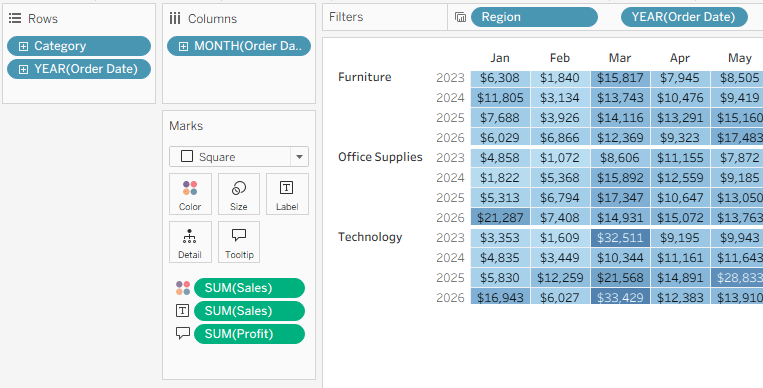
Drag the cards around (filters, rows, columns, etc.)
Note – the new layout is saved per worksheet, not for the whole workbook.
2
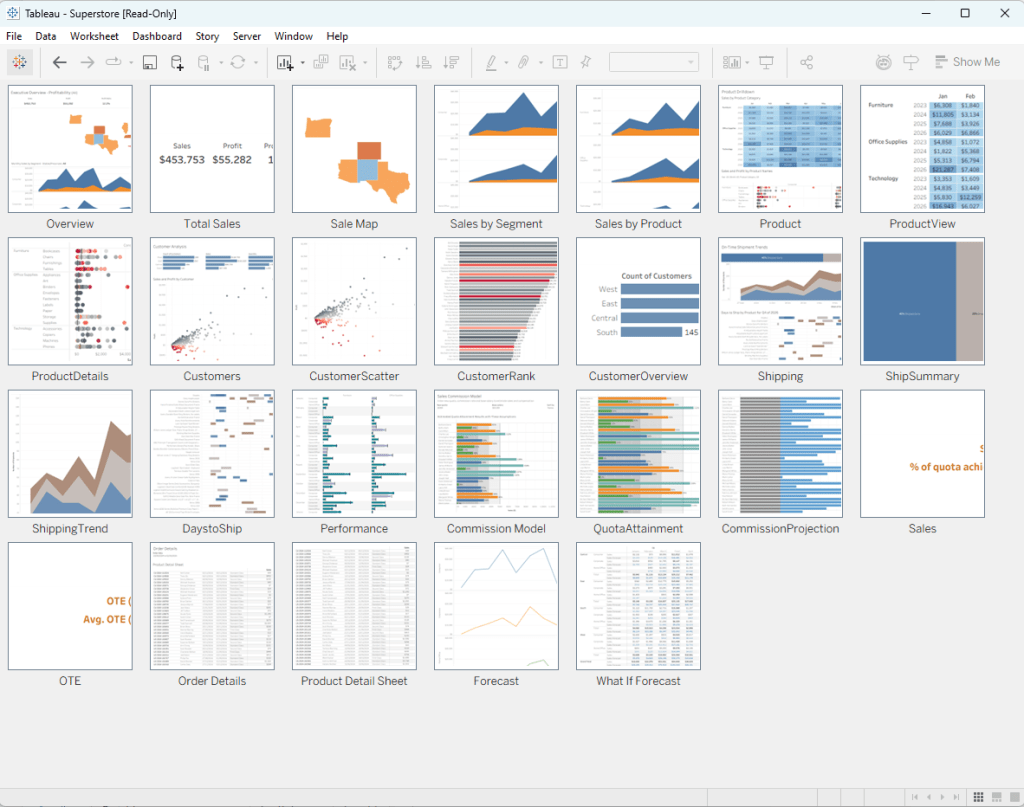
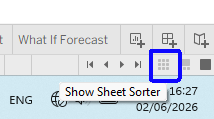
Use the Sheet Sorter to organize your dashboards/worksheets – it’s the small icon on the bottom right.
Tip – if it’s not showing all the thumbnails, you can right-click anywhere and “Refresh All Thumbnails”.
3
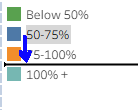
Drag legend items to reorder them in the chart.
4
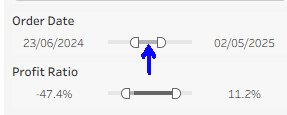
On a range filter (numerical or date), if you drag from the center of the range it keeps the interval constant and moves both ends of the range.
This is good for users as well as developers.
5
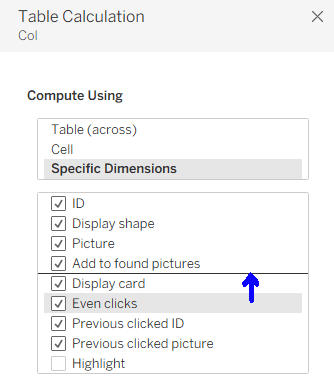
When editing table calculations, the fields can be dragged into the right order.
6
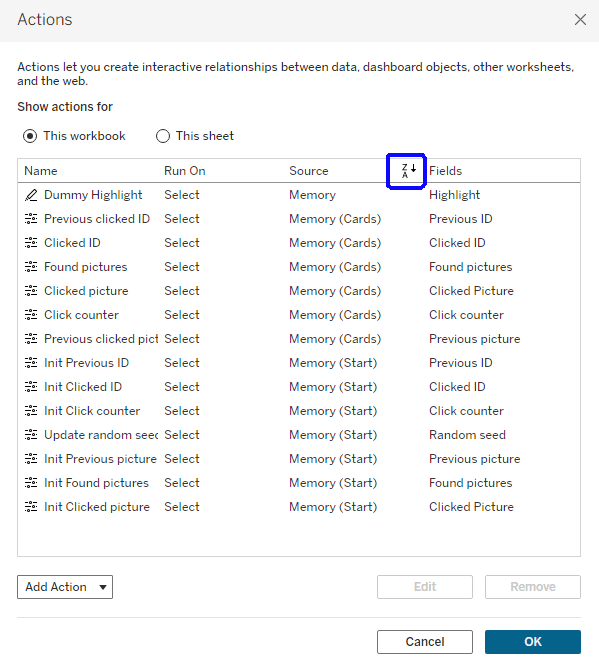
Dashboard or worksheet actions can be sorted by clicking on the column header.
7
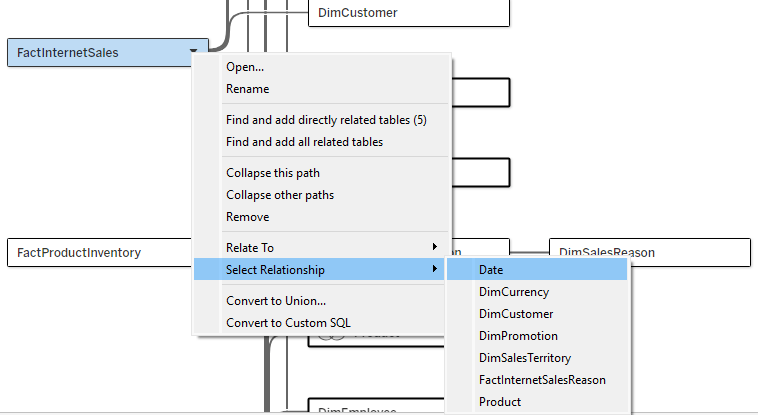
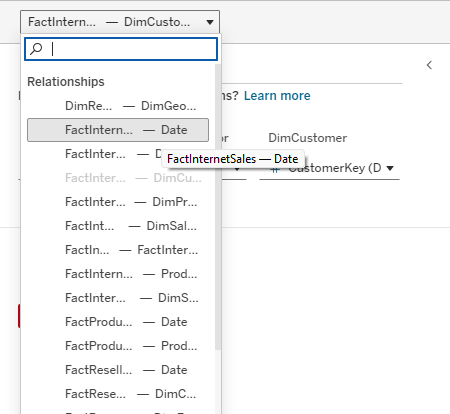
If you’re having trouble clicking exactly on a relationship “noodle” to select it in your data source, go to the menu for one of the tables and “Select Relationship”.
You can also do this from the dropdown above the relationship/table details pane, but the text there is always cut off (though it has a tooltip).
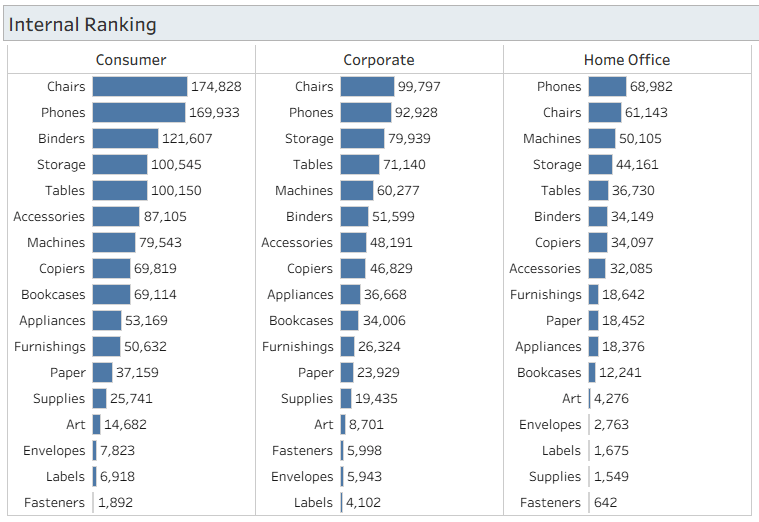
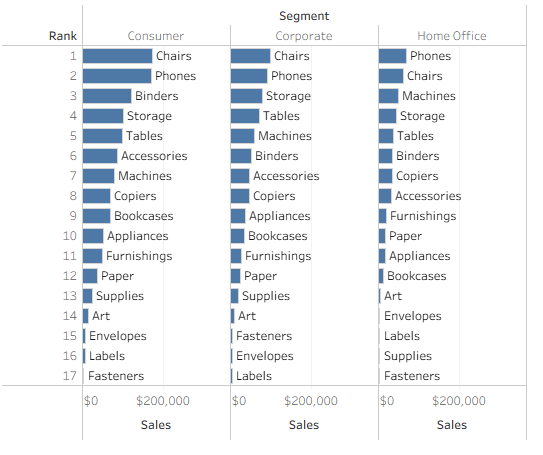
A customer recently asked me how to display a bar chart like this:
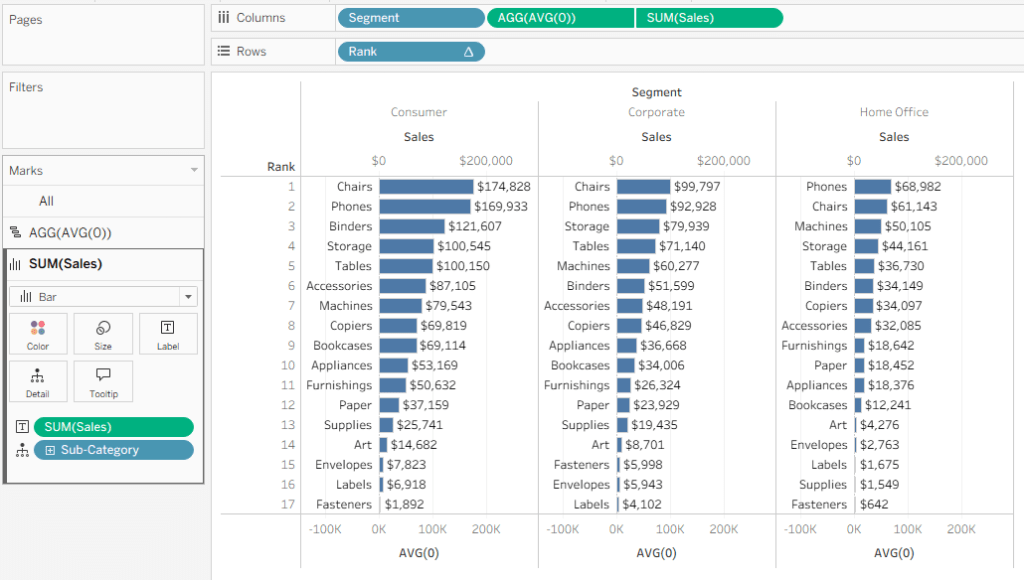
You have segments (any dimension) on the columns, and then the bars are sorted and labelled by the categories (any other dimension) on the rows.
If your segments are static you can have 3 separate worksheets side by side, but that’s not the proper way to do it, and it won’t work if the segments themselves are changing based on some other filter. Fortunately, Tableau has Table Calculations, and there’s a neat and simple solution.
The only calculated field I need is [Rank]: RANK(SUM([Sales]))
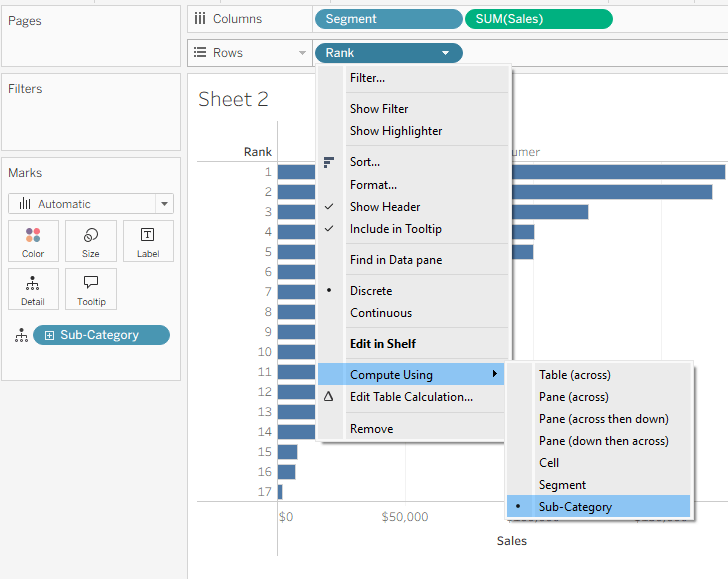
I then place this on Rows, Segment on Columns, drag Sales to Columns in order to create bars, and add Sub-Category to Detail.
What a mess! Just one more thing… go to the menu for Rank and Compute using → Sub-Category. And we have a bar chart, sorted separately for each segment.
The rest is just formatting, but it’s the important part:
Add Sub-Category to Labels on the bars.
Nice, but that’s not what the customer wants. The Sub-Category has to be to the left of the bar, and the value as a regular label.
Add a new field on Columns: AVG(0)
In the menu for this field, apply Dual Axis. This temporarily messes up the chart.
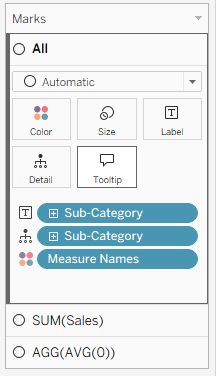
We now have three Mark cards on the left:
On the All card, remove Measure Names
On the SUM(Sales) card, change the mark type to Bar, and drag Sales to Label instead of Sub-Category
On the AGG(AVG(0)) card, change the mark type to Gantt Bar, and drag Sub-Category to Label. Change the Label alignment to Left.
Right-click on one of the axes and Synchronize Axis. Then drag the AGG(AVG(0)) pill in the Columns so it’s before (to the left of) the SUM(Sales) pill.
You should be seeing this:
The rest is pure cosmetics:
Format Lines to remove the grid lines from the chart.
Unclick “Show Header” on the Rank pill.
Edit each axis (top and bottom) so it shows whatever you need, or remove them altogether using Show Header on the green pills.
Format the bars and labels in any way that you want
And the end result is as required, with the number of columns flexible – you can even enable the user to switch dimensions easily using a parameter. Each column has the Sales sorted and labelled neatly by Sub-Category.
There are more complicated use cases, of course, such as negative values that can overlap with the labels. In such cases some tweaking of formulas is needed, but this is the basic technique. And my customer is already using the technique in a production dashboard.
The most memorable Tableau trick that I encountered at DataFam Europe this year was something that I already knew of (vaguely), but seeing it twice brought it to my attention and now it won’t be pushed to the back of my trick cupboard again.
This was presented both by Andy Cotgreave in DataFam Slam (minute 36:00), and by Nhung Le in Tremendous Tableau Tips (minute 20:00), with different context (you need to register for Salesforce+ to see the videos). I’ll discuss just the technique, and what it can be used for.
So what are text bars? You can use a text field in Tableau to create a horizontal bar, and also manipulate its length using the data. This is possible due to the existence of the Unicode characters “█” (U+2588: Full Block) and “▒” (U+2592: Medium Shade).
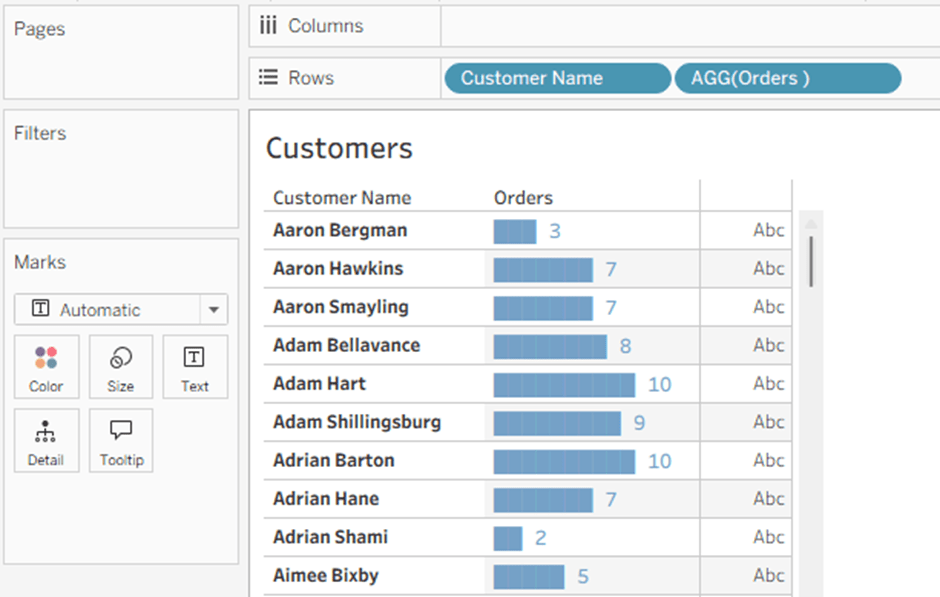
Let’s say we want to display our count of orders per customer, which is not a very large number, in bars within the table header. We create a calculated field:
REPLACE(SPACE([No. of Orders]), ” “, “█”)
The SPACE function returns a number of spaces as defined in the parameter that you give it (up to a limit, of course – don’t try to exceed 100 or so), and then we replace them with the Full Block character. The result is a text bar, that can be placed as a header in the rows of out worksheet:
The label at the end is a simple concatenation:
REPLACE(SPACE([No. of Orders]), ” “, “█”) + ” ” + STR([No. of Orders])
Another option is to use the text bar to display a percentage value, though it has to be rounded. In this example I am rounding to the nearest 5%, and filling up the 100% with the partially shaded bar:
Note the MAX function, which I am using to eliminate negative values.
The end result is below. No concatenated label this time, because formatting the percentage value to a string is complicated, so I simply added the Profit Ratio value as the next field. The Segment field is there to show that the bars are within the header.
Andy showed how text bars can be used within tooltips (before Viz in Tooltip was released), but I’m sure the community will think up other implementations, apart from the simple spicing up of a table that I showed, and probably using other special characters as well.
This is a revised copy of my original post in the Tableau Community blogs from 2023.
Over the years I’ve encountered many examples of data that includes arrays of values within a single field – either in JSON format or as simple text, such as this: [[4,0],[5,3],[7,3],[8,0],[4,0]]
Usually the data can be un-nested using SQL or JSON functions into a set of separate rows, which can then be linked to the original data table as a separate table. However, a few years ago I was working on a system with no such option: the original data was in ElasticSearch, and our ODBC driver didn’t enable any un-nesting functions. And we needed to get the row data from the arrays.
It turns out that Tableau can do this quite easily. Here is the solution:
1. Build a regular data source from your table, with the array field as normal text. In the example, it’s called [Shape Coordinates].
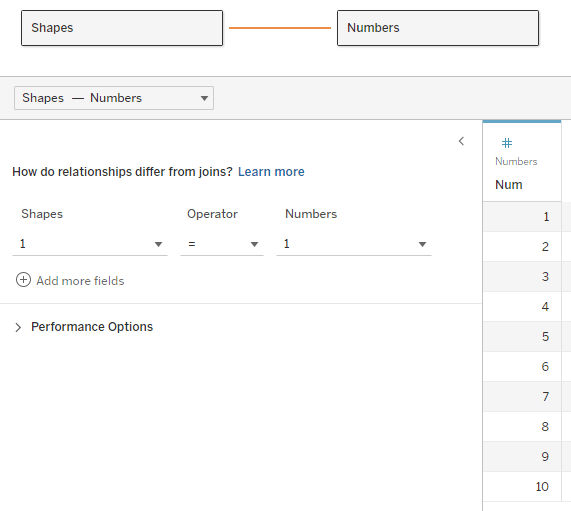
2. Create a table of numbers from 1 to N, with N being larger than the maximum size (number of items) in your array. The table can be in Excel, the database, or any other format. Add the table to the data source and join it to the data table using a relationship, using a full cartesian join – meaning that you create a relationship calculation with an identical value (I use 1) on each side.
Note – the example here unnests a two-dimensional array. Each value has any number of pairs of coordinates, specifying a shape to be drawn on the page. The real data actually had pairs of real coordinates (latitude/longitude) specifying a GPS track.
Now, for every row of data we have numbers from 1 to N in the corresponding table, which we will use to find the 1st, 2nd, 3rd, and so on… members in the array, by splitting it using the commas and brackets in the string. I would have loved to use the SPLIT function here, but it doesn’t accept a field or variable as a parameter, so we’ll use FINDNTH instead:
3. We find the start of each member: Start → FINDNTH([Shape Coordinates], “],[“, [Num]-1)
Note that I’m looking for “],[“, because the comma alone is not enough – it will find the split between each pair as well.
4. The end of each member: End → FINDNTH([Shape Coordinates], “],[“, [Num])
5. The length of each member is basically End minus Start (the last member has no End, so I use a maximum value, longer than any string that I would expect:
Length → IF [Start] > 0 THEN
IF [End] > 0 THEN [End] – [Start]
ELSE 20
END
END
6. Now the actual split: Split → MID([Shape Coordinates], [Start], [Length])
7. And clean up all the brackets and commas: Pair → REPLACE(REPLACE(REPLACE([Split], “],[“, “”), “]”, “”), “[“, “”)
I’ve now unnested my array and retrieved an ordered list of values for each row of data. In this case the values are pairs of numbers, but they could be any type of data. If there are less than N members in the array, the Split and Pair fields return Null and can be filtered out. The data looks like this:
8. I split the pairs into X and Y coordinates:
X → FLOAT(SPLIT([Pair], “,”, 1))
Y → FLOAT(SPLIT([Pair], “,”, 2))
9. Now I can visualize my geometric shapes on a worksheet using polygons:
Discussion
This technique works, and caused no performance issues on a dataset that included tens of thousands of records, with each array having up to 50 pairs of latitude/longitude values.
The “normal” solution would unnest the arrays using SQL, thereby creating a new data table with a large multiple of the original number of records, though with very few fields (ID, X and Y). If you are visualizing only a small number of records at a time, I would expect much better performance from my technique, which calculates the array data on the fly and only for the specific records you need. However, if you are filtering or aggregating by array data from thousands or millions of records in one view, a pre-calculated table would probably be much faster.
I’ve been working as a consultant for a Tableau Partner (and reseller) for over a decade, so I’ve been asked by potential customers many times: Why Tableau? Why should we prefer Tableau over its competitors – Power BI, Qlik, Looker, and various others?
For the customers we have various answers, depending on the context – their requirements, size, deployment type, self-service, embedding, even the community support, and more. But why am I a Tableau “freak”? And so many others in this same community? What makes Tableau special, compared to the other top-end visualization tools?
I’ve been working in data visualization since the nineties, first with Panorama (which, back then, was excellent) and then touching upon various other tools. When I tried out Tableau for the first time (around 2014) it was just a test in my spare time, and nothing happened. But about a year later I got my first project, so I had to dig deeper, and I was hooked.
So what’s the difference? There are two major factors.
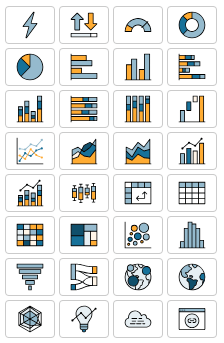
First – all the visualization tools I had used before, and most of those I’ve seen since, have a similar method for creating a chart (“worksheet”, “widget”, or whatever): You choose the type of chart from a menu, connect it to your data model, and start setting the properties – which dimension is on rows (or “categories”), what measure to display, bar color, line thickness, label font, and so on. If you need a different type of chart, you get a new set of properties.
Power BI chart selection
Quicksight charts
Tableau, from the beginning, was different. Every worksheet (for a chart or table) uses the same set of definitions, or cards: Columns, Rows, and Marks. You have several types of marks, but almost all of them have the same sets of properties – Color, Size, Text, Tooltip, Detail (and sometimes Shape, Path and Angle). The “Show Me” pane is just a set of default configurations, not really a chart selector, and I rarely use it.
This means that once you understand the interaction between rows, columns and marks, you can create almost anything – and I mean anything, not just data visualizations, but also artwork and games, for example. There’s an inherent flexibility that gives Tableau an advantage over other tools, both in speed of development and in the ability to iterate and “play around”, because you don’t have to select or switch the type of object that you’re working on all the time, and you’re not limited to their predefined attributes.
The Tableau interface
The second factor is Tableau’s calculations. I agree that all BI tools have the ability to create calculated fields, but Tableau has a great combination of a simple interface – everything is in one place, easily accessed and edited – and a large array of options, from the simplest arithmetic to Level of Detail functions and Table Calculations. Once you gain a basic understanding of how it works – aggregate and row-level, and a few other basics – it’s very easy to use, and also very powerful.
Try creating this without Tableau
Some people don’t get it. They’ve been using Power BI or another competitor’s software for years, have difficulty switching to a Tableau mindset, and will always prefer their original tool. But I believe that Tableau’s greatest advantage is still the basic development interface, that allows you more flexibility and speed of implementation compared to its competitors.
Of course there are other features. In Desktop – you can create a flexible data model from almost anything, and then manipulate the data in various ways. Dashboard design and actions. Beyond it – Tableau can be used by a lone researcher or by an enterprise with 50,000 users, online or offline. Tableau Public, of course. APIs, embedding, and more. The Community.
But as Andy Kriebel, in my opinion the greatest Tableau guru of all time, recently wrote:
Tableau is not Agentic Analytics Tableau is not Tableau Next Tableau is not Tableau Cloud
Tableau is Tableau Desktop
What he meant was that the core of Tableau is still the basic development interface, of which Tableau Desktop is the main component. You can add features around it, but without Desktop it won’t be the same. And Desktop is what makes Tableau the best.
Many times, I’ve encountered Tableau developers struggling with the date formatting in their workbooks, mostly as it defaults to the US format (mm/dd) instead of what they need – and then they waste time setting custom formats for date fields in various worksheets.
The solution to this, and one of the lesser known features of Tableau Desktop, is the “Workbook Locale” setting, located under the “File” menu.
The “Automatic” option defaults to your computer’s regional settings, but if you select “More” you can choose your language, and then all date and number formats in the workbook will use that setting by default.
Even less known is the fact that this setting, at the workbook level, overrides any other regional locale. So if you save the workbook with a locale other than “Automatic”, the date and currency format is fixed, even after publishing to Tableau Server or Cloud.
The order of precedence is listed below, and documented here:
Workbook locale (set in Tableau Desktop)
Tableau Server User Account language/locale settings
Web browser language/locale
Tableau Server Maintenance page language/locale settings
Host computer’s language/locale settings
The bottom line – you can control everything using Workbook Locale, so use it, unless you need varying formats for users in different languages or countries, of course.
Tableau always release new versions with a list of new and exciting (or not so) features, such as this, but there are sometimes really helpful additions or modifications that are unlisted, and even undocumented.
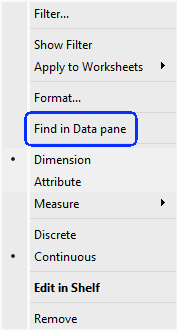
I always start using a new version of Tableau Desktop almost immediately, because as a consultant I have to keep up to date. So when version 2025.2 came out I was working with it within a day, and suddenly saw a new menu entry:
My first reaction was “Is this what I think it is?”. My second was to click on it.
It’s definitely what I thought. No more searching for a field from your worksheet in the Data pane, in order to check the formula. Click on “Find in Data pane” and it finds the field immediately.
For me, as a consultant, this is a game-changer. I spend hours with my clients, when something isn’t working as they expect, checking their calculated fields, and we always start from the worksheet rows, columns, and marks. Now we can save time and jump straight to the field, without scrolling or typing in the search box.
Unfortunately this is currently relevant only for Tableau Cloud users, because Server doesn’t have a 2025.2 version, but it’s a great new feature. And I haven’t found it in the documentation yet…